- "Green Energy, Infinite Energy"

Solar Panel Company
Top 10 Solar Panel Company in India 2026 - Ashirwad Solar
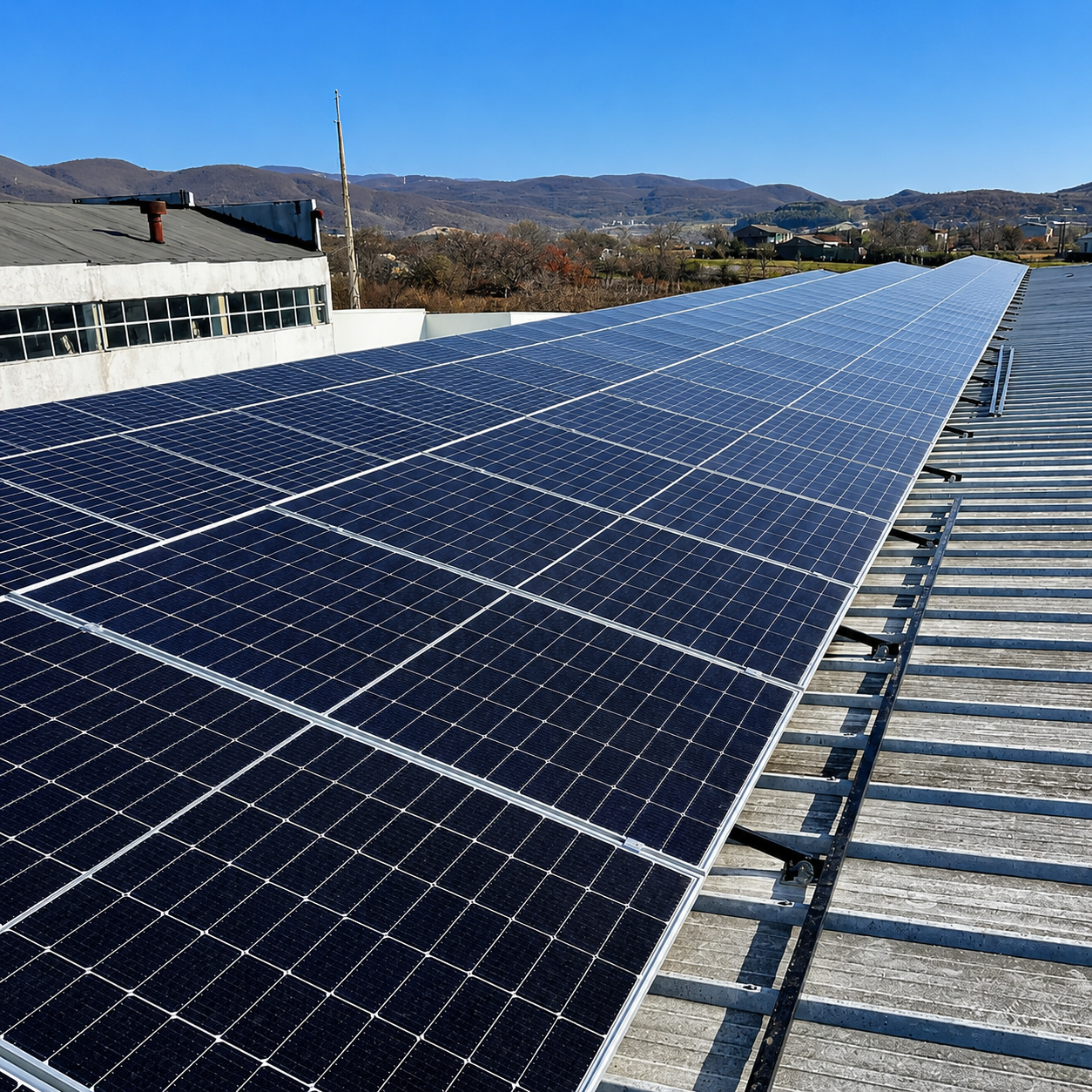


Ashirwad Solar is a growing Solar Panel Company in India, providing customized solar energy solutions for residential, commercial, industrial, and agricultural applications. We specialize in delivering reliable and affordable solar power systems designed to reduce electricity expenses, improve energy efficiency, and support a sustainable future.
As a renewable energy company, we offer comprehensive solar solutions, including rooftop solar systems, commercial solar installations, industrial solar solutions, solar water pumps, solar water heaters, and EV charger installations. Our services cover consultation, site assessment, system design, engineering, procurement, installation, testing, and commissioning.
We focus on using quality solar panels, efficient inverters, and dependable electrical components to provide high-performance solar energy systems. Whether you need solar panels for a home, factory, school, hospital, apartment, villa, or office, we help you choose a solution according to your electricity requirements, available space, and budget.
Our goal is to contribute to India's renewable energy development by making clean, sustainable, and affordable solar power accessible to more customers.
About Ashirwad Solar – A Leading Solar Panel Company in India
Ashirwad Solar is committed to delivering dependable solar energy solutions that help customers transition towards renewable electricity. Based in Pune, Maharashtra, we serve customers looking for professional solar installation services and customized solar power systems.
As a Best Solar Company in India, we understand that every property and business has different energy requirements. Our team focuses on evaluating electricity consumption, installation conditions, system capacity, and future requirements before recommending an appropriate solar solution.
We aim to provide reliable and high-quality solar installation services supported by technical planning, quality-focused components, and customer-oriented assistance.
Whether you are exploring solar energy for your home or planning a large commercial or industrial project, Ashirwad Solar offers solutions designed around your specific needs.
Our Solar Products and Services
As a comprehensive solar installation company, Ashirwad Solar provides different solar products and services for residential, commercial, and industrial customers. Among the Solar Energy Companies in India, we aim to offer a diverse range of renewable energy products and installation services.
- Residential Rooftop Solar Systems: Generate clean electricity for homes, apartments, and villas while reducing grid electricity consumption.
- Commercial Rooftop Solar: Customized solar installations for offices, schools, hospitals, hotels, and commercial buildings.
- Industrial Solar Solutions: Solar power systems for factories, manufacturing units, warehouses, and industrial facilities.
- Solar EPC Services: Complete engineering, procurement, construction, testing, and commissioning services.
- Solar Water Pumps: Solar-powered irrigation and water pumping solutions for agricultural applications.
- Solar Water Heaters: Solar thermal systems for residential and commercial hot water requirements.
- EV Charger Installation: Electric vehicle charging solutions for residential and commercial properties.
- Solar Street Lights: Solar-powered outdoor lighting solutions for suitable residential, commercial, and infrastructure applications, with products comparable to those offered by Solar Street Light Manufacturers in India.
- ETC Tube Solutions: Evacuated tube collector products for solar water heating applications.
Our objective is to provide practical solar energy solutions that deliver long-term value and support cleaner energy consumption.
Types of Solar Panels Available in India
The right solar panel for you depends mainly on three things: how much roof or land space you have, your budget, and how much electricity you need. As a Solar Panel Company in India, we supply and install the panel types below. Each one links to its own page with full details, so you can compare options before you ask for a quote.
Not Sure Which Solar Panel to Choose? Start Here
- Limited roof space and you want maximum power: look at MonoPERC panels.
- You want proven high efficiency for a home or business: choose monocrystalline panels.
- You have plenty of space and a tighter budget: consider polycrystalline panels.
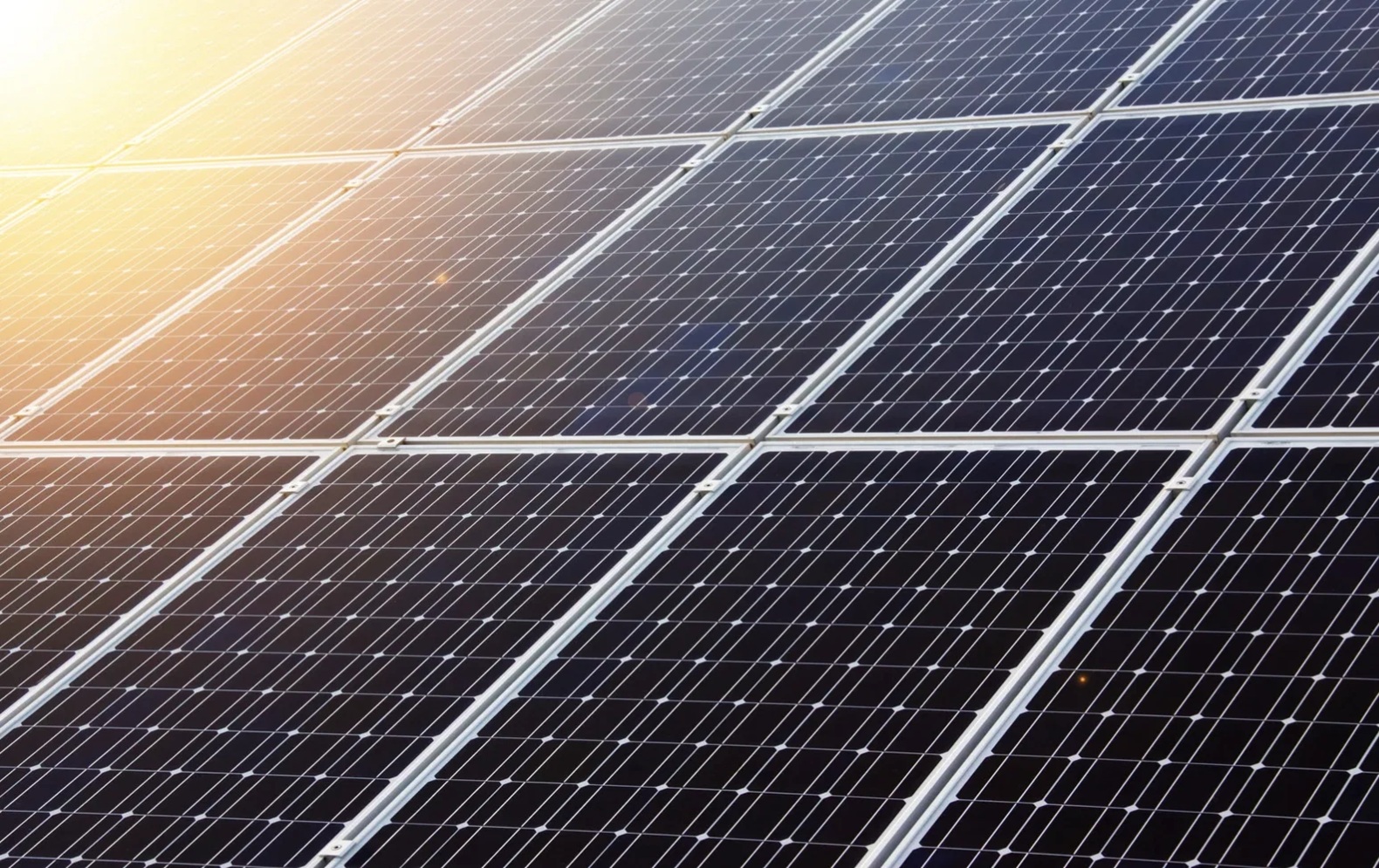
MonoPERC Solar Panel
Best for: rooftops with limited space, hot summers and cloudy days
A MonoPERC solar panel is a monocrystalline panel with an extra layer on the back of each cell, so it captures more light and turns more sunlight into electricity. It typically performs better than traditional panels in low light and high heat.
- More power from the same roof area
- Keeps generating in early morning, evening and cloudy light
- Suits homes, shops, offices and factories
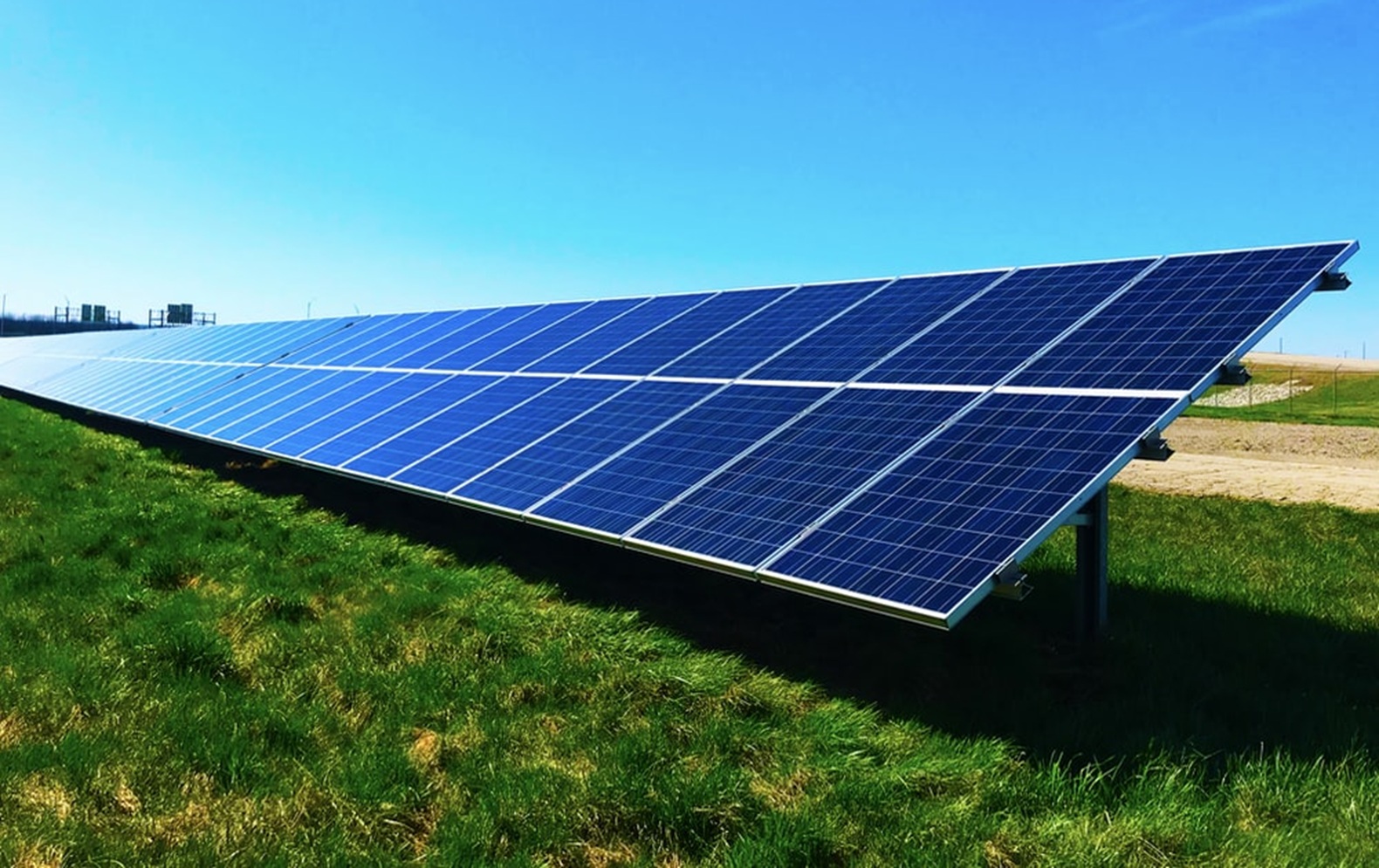
Twin Peak Solar Panel
Best for: getting maximum output from limited space
A Twin Peak solar panel is a high-efficiency, high-output panel designed to generate more electricity from the same installation space. Its design lowers resistance, exposes more cell area to sunlight and absorbs more light.
- High efficiency and power output from every panel
- Less energy lost as heat inside the cells and panel
- A strong fit for small terraces and crowded roofs
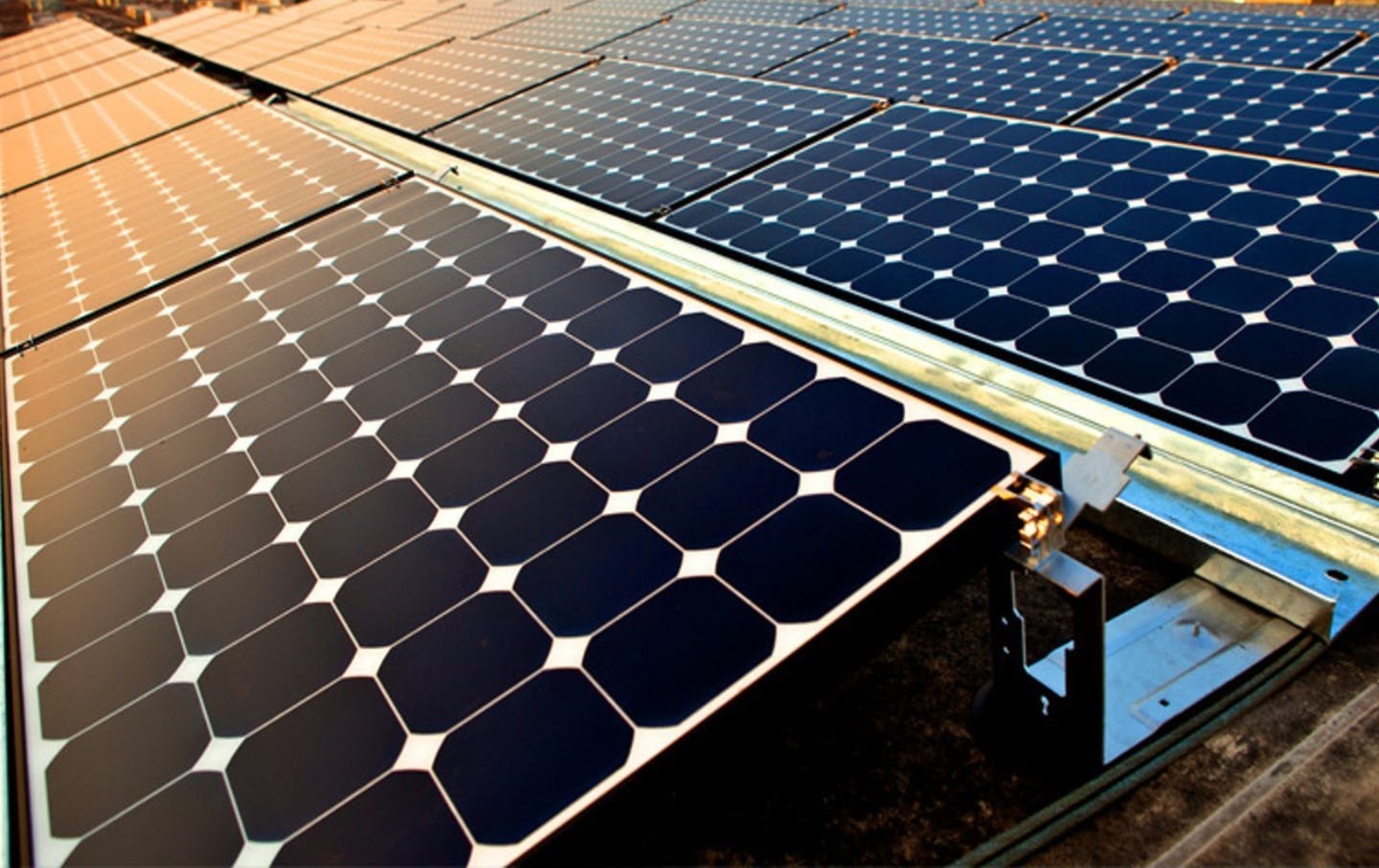
Monocrystalline Solar Panels
Best for: homes and businesses that want reliable, high-efficiency performance
Monocrystalline solar panels are made from single-crystal silicon, which gives higher efficiency and a sleek, uniform look. They need less space for the same capacity, which makes them a popular choice where the roof is limited.
- Higher efficiency than polycrystalline panels
- Same capacity from a smaller roof area
- Used in both on-grid and off-grid systems
Polycrystalline Solar Panels
Best for: budget-conscious projects with plenty of roof or land space
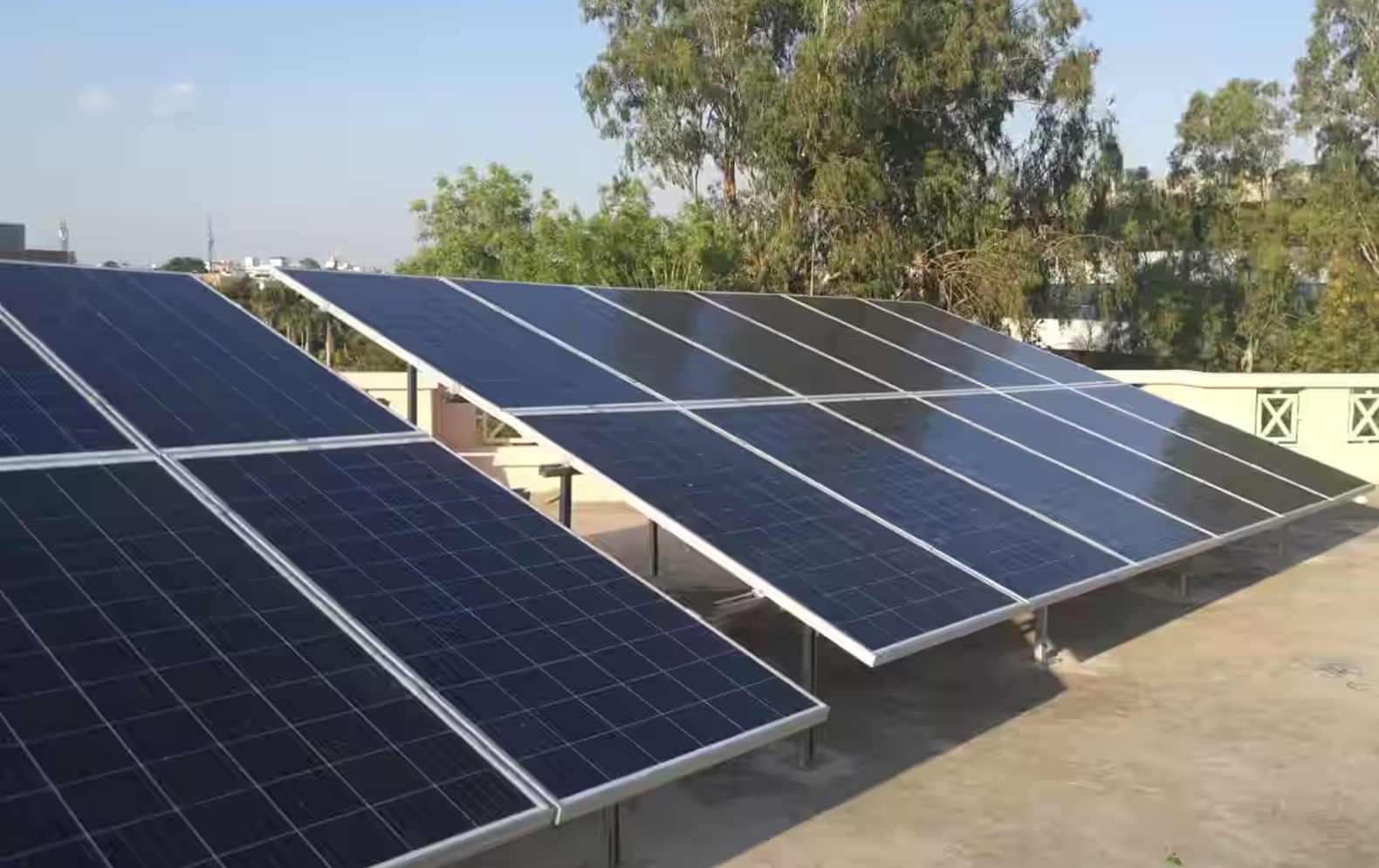
Polycrystalline solar panels use multi-crystal silicon. They are generally less efficient than monocrystalline panels and need more space for the same capacity, but they usually cost less, which makes them a practical option when space is not a problem.
- Usually the lower-cost panel option
- Suits larger roofs and open land
- Easy to compare with our higher-efficiency panels
Types of Solar Power Systems Available in India
As a trusted name among Solar Panel Companies in India, we offer different types of solar power systems designed to meet residential, commercial, industrial, and agricultural energy requirements. Understanding each system helps you choose the right solar solution based on electricity consumption, grid connectivity, and backup requirements.
1. On-Grid Solar System
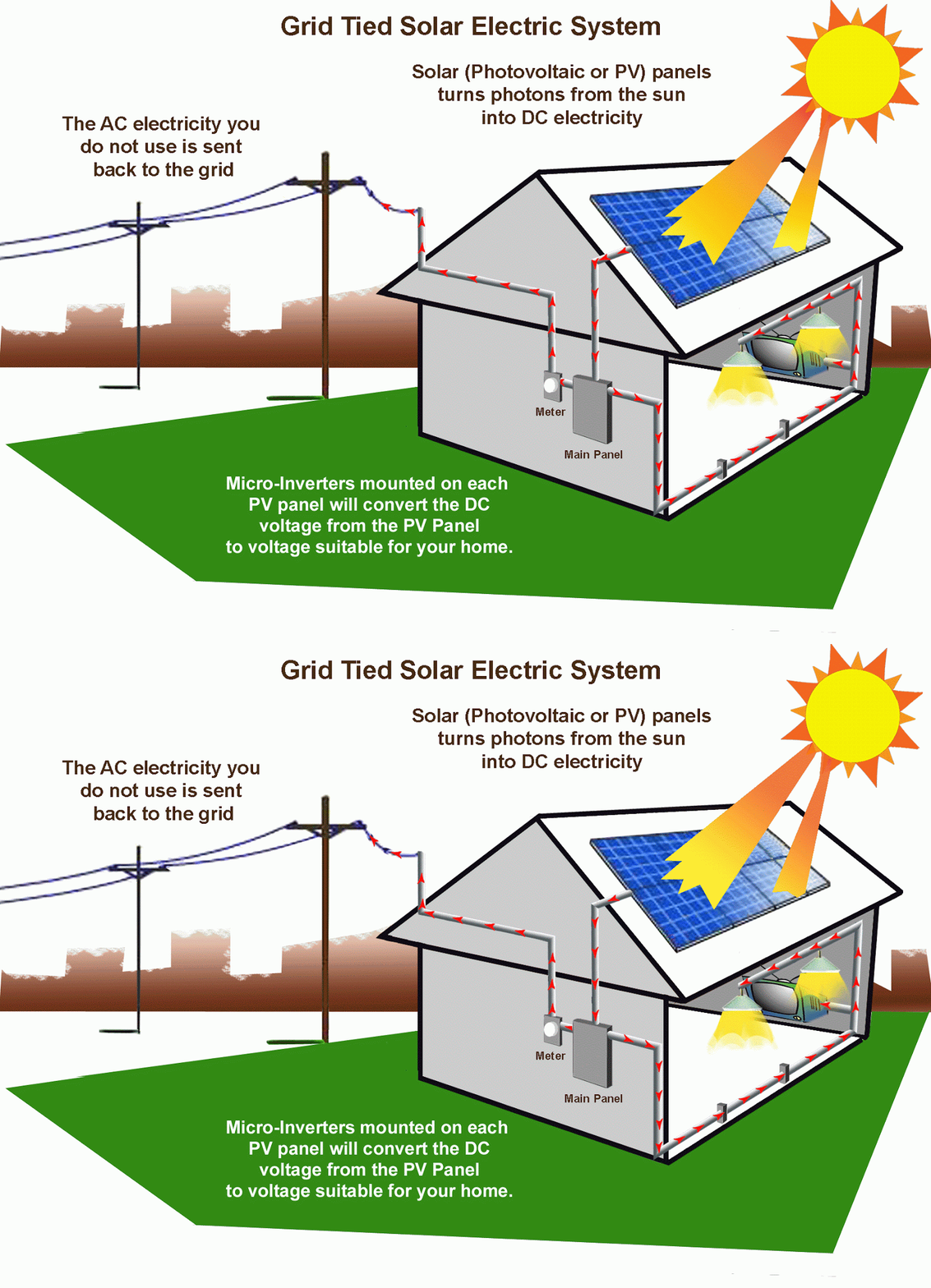
An on-grid solar system is connected to the electricity grid and uses solar panels to generate electricity for your home or business. It helps reduce electricity bills, while excess power can be exported to the grid through net metering, wherever permitted.
Ideal for: Residential homes, apartments, offices, retail stores, schools, and commercial buildings looking to reduce electricity expenses.
Learn about grid-connected solar electric systems →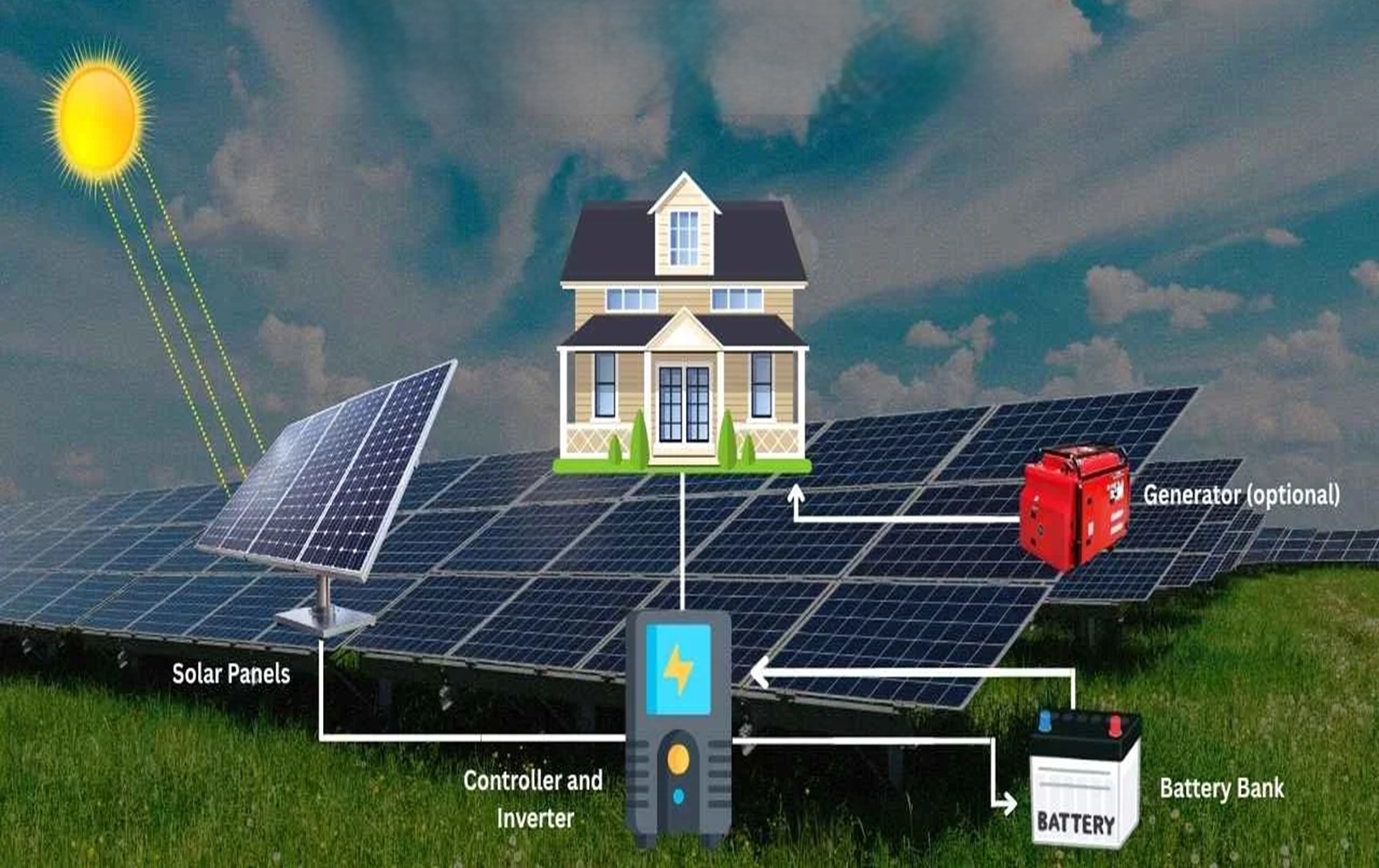
2. Off-Grid Solar System
An off-grid solar system operates independently without a connection to the electricity grid. It uses battery storage to store excess solar energy, providing electricity at night and during periods of insufficient sunlight.
Ideal for: Agricultural farms, irrigation systems, rural homes, remote locations, and areas with unreliable grid electricity.
Learn about off-grid solar electric systems →3. Hybrid Solar System
A hybrid solar system combines solar panels, battery storage, and grid connectivity to provide a flexible electricity solution. It stores excess solar energy for later use and can supply backup electricity during grid outages, depending on the system configuration and battery capacity.
Ideal for: Independent houses, villas, hospitals, offices, apartments, and commercial buildings that require reliable electricity along with backup power.
Comparison of On-Grid, Off-Grid and Hybrid Solar Systems
Understanding the differences between solar power systems helps you select the right solution according to your electricity requirements and installation preferences.
| Comparison Factor | On-Grid Solar System | Off-Grid Solar System | Hybrid Solar System |
|---|---|---|---|
| Grid Connectivity | Connected to the electricity grid | Operates independently | Connected to the electricity grid |
| Battery Storage | Generally not required | Required | Required for battery backup |
| Power Backup | Generally unavailable during grid outages | Available through battery storage | Available through configured battery storage |
| Excess Solar Energy | Exported to the grid where permitted | Stored in batteries or curtailed | Stored or exported depending on configuration |
| Initial Investment | Generally lower | Generally higher | Generally higher |
| Electricity Bill Reduction | Yes | Reduces grid dependence | Yes |
| Energy Independence | Limited | High | Moderate to high |
| Maintenance | Relatively low | Includes battery maintenance | Includes battery and inverter maintenance |
| Suitable Applications | Homes and commercial buildings | Farms and remote locations | Homes and commercial facilities |
Our Solar Panel Installation Process
We follow a systematic and professional solar installation process to ensure efficient system design, quality installation, and reliable solar power generation. Every stage, from initial consultation to final commissioning, is carefully planned according to the customer's electricity requirements, site conditions, and budget.
The following step-by-step process ensures a smooth solar installation experience for residential, commercial, industrial, and agricultural projects.
Step-by-Step Solar Installation Process
| Step | Installation Stage | Process Description |
|---|---|---|
| 01 | Initial Consultation | Understanding electricity consumption, monthly electricity bills, energy requirements, and project objectives to recommend a suitable solar power solution. |
| 02 | Site Inspection | Evaluating available rooftop space, sunlight exposure, shading conditions, structural suitability, and existing electrical infrastructure. |
| 03 | Solar System Design | Preparing a customized solar system design based on required capacity, solar panels, inverter specifications, mounting structures, and electrical configuration. |
| 04 | Quotation & Approval | Providing a detailed project quotation covering equipment specifications, installation scope, project requirements, and estimated costs for customer approval. |
| 05 | Equipment Procurement | Selecting and arranging suitable solar panels, inverters, mounting structures, cables, electrical protection devices, and other essential components. |
| 06 | Solar Panel Installation | Completing mounting structure assembly, solar module installation, inverter setup, cable routing, and electrical connections according to appropriate safety practices. |
| 07 | Testing & Commissioning | Conducting electrical inspections, safety checks, system testing, and performance verification to ensure proper solar system operation. |
| 08 | Final Handover & Guidance | Providing system operation guidance, inverter monitoring information, basic maintenance instructions, and relevant equipment documentation. |
Benefits of Installing Solar Panels
Installing solar panels is a smart investment for homeowners, businesses, and industries looking to reduce electricity expenses and adopt clean, renewable energy. Solar power offers several long-term benefits, making it an effective solution for sustainable electricity generation and improved energy efficiency.
- Reduced Electricity Expenses: Solar panels generate electricity from sunlight, helping reduce dependence on grid electricity and lower monthly electricity bills.
- Renewable Electricity Generation: Solar energy is a clean and renewable power source that generates electricity from abundant sunlight without consuming conventional fuels.
- Lower Dependence on Grid Power: A solar power system allows homes and businesses to generate their own electricity, reducing reliance on traditional electricity supply.
- Long-Term Energy Savings: Solar installations can provide long-term financial savings through reduced electricity expenses over the system's operating life.
- Environment-Friendly Energy: Solar power helps reduce greenhouse gas emissions and supports a cleaner environment by replacing a portion of conventional electricity consumption.
- Suitable for Different Industries: Solar energy solutions are suitable for homes, factories, schools, hospitals, offices, warehouses, hotels, and agricultural properties, offering customized power solutions for different energy requirements.
Applications of Solar Energy Solutions
Solar energy is a reliable and sustainable power solution for residential, commercial, industrial, and agricultural applications. Ashirwad Solar provides customized solar power systems designed to meet different electricity requirements, reduce energy costs, and promote clean energy adoption.
- Residential Homes: Residential rooftop solar systems help homeowners generate their own electricity, reduce monthly electricity bills, and decrease dependence on conventional power sources.
- Commercial Buildings: Commercial solar installations help offices, shopping complexes, hotels, and retail businesses reduce operating expenses through renewable electricity generation.
- Industrial Manufacturing Units: Industrial solar power systems help factories and manufacturing facilities meet their electricity requirements while reducing grid electricity consumption and long-term energy costs.
- Schools and Educational Institutions: Schools, colleges, and universities can use rooftop solar systems to reduce electricity expenses and promote environmental awareness among students.
- Hospitals and Healthcare Facilities: Solar installations help hospitals reduce electricity costs and support their daily power requirements for lighting, air conditioning, and other essential operations.
- Hotels and Resorts: Hotels and resorts can utilize solar energy for guest rooms, kitchens, laundry facilities, and common areas to reduce electricity expenses and support sustainable hospitality operations.
- Warehouses and Storage Facilities: Large warehouse rooftops provide suitable space for solar installations, helping reduce electricity consumption for lighting, ventilation, refrigeration, and other operations.
- Agricultural Farms: Solar energy solutions, including solar water pumps, help farmers operate irrigation systems and water supply equipment while reducing dependence on conventional electricity and diesel.
- Government and Public Infrastructure: Government offices, public buildings, and infrastructure facilities can adopt solar power systems to reduce electricity expenses and support renewable energy initiatives.
- Offices and Corporate Buildings: Rooftop solar installations help corporate offices generate clean electricity for computers, lighting, air conditioning, and other daily operations while improving energy efficiency.
As a Solar Manufacturing Company in India is focused on manufacturing solar products, we recognize the importance of quality equipment and dependable technology. We also help customers understand solar panel and inverter options, including products from established Solar Panel Manufacturers in India, and choose a suitable Best Solar Inverter in India for their system requirements. As a Photovoltaic Company focused on solar energy solutions, our goal is to support India's renewable energy development.
Why Choose Us?
- Experience in the Solar Industry: Since 2007, we have been working in the solar energy sector, building our expertise in solar water heating and renewable energy products to serve diverse customer requirements.
- Wide Range of Solar Products: As a Best Solar Panel Company in India, we offer a comprehensive range of solar products, including solar panels, solar water heaters, ETC tubes, solar pumps, solar street lights, and solar power systems under one roof.
- Commitment to Product Quality: We focus on quality components, reliable solar technologies, and suitable product selection to deliver efficient, durable, and dependable renewable energy solutions. We help customers select the Best Solar Panels in India according to their project requirements and available budget.
- Customized Solar Solutions: We provide customized solar solutions for homes, apartments, factories, schools, hospitals, offices, warehouses, and agricultural properties based on their specific energy requirements.
- Commitment to Clean Energy and Customer Support: We are committed to promoting renewable energy adoption through our expanding dealer network, customer assistance, and diverse solar solutions that contribute to a cleaner and more sustainable future. As a Clean Energy Company and Green Energy Company, we aim to make renewable electricity more accessible to customers across India.
Ashirwad Solar is a trusted Solar Panel Company in India, for reliable, efficient, and customized solar energy solutions. With advanced solar technology, quality components, and professional installation services, we help homeowners and businesses reduce electricity expenses and achieve long-term energy savings. From system design to installation and maintenance, we are committed to promoting clean energy and building a sustainable future. Get in touch with us for additional details.
FAQ’s
Solar installation costs depend on system capacity, panel technology, inverter, mounting structure, and installation requirements. A customized quotation helps determine the actual project cost.
The number of panels depends on the wattage of each solar module. For example, a 3kW system generally requires 6 panels of 500W each.
High-efficiency monocrystalline solar panels, including TOPCon technology, are popular choices for residential installations. The ideal panel depends on efficiency, available roof space, budget, and warranty.
On-grid systems connect to the electricity grid, off-grid systems operate using battery storage, and hybrid systems combine grid connectivity with battery backup. The right option depends on your electricity and backup requirements.
Yes, a properly designed solar system can operate a 1.5-ton AC along with other appliances, depending on their combined power consumption, operating hours, and available solar generation.
Yes, solar panels generate electricity during cloudy and rainy weather, but their output may decrease due to reduced sunlight. Generation is generally higher under clear sunlight conditions.
Quality solar panels are designed to operate for 25 years or longer, depending on product quality and maintenance. Actual performance depends on environmental conditions and manufacturer warranties.
Solar panels require periodic cleaning to remove dust and dirt, along with occasional inspection of inverters, cables, and electrical connections. Regular maintenance helps maintain efficient system performance.
Yes, eligible residential consumers can receive financial assistance under the PM Surya Ghar Muft Bijli Yojana, subject to applicable scheme guidelines and installation requirements.
Standard on-grid solar systems automatically shut down during grid outages for safety. Hybrid and off-grid systems can provide backup electricity when configured with suitable battery storage.